Anyone using cylinder gas needs to make sure they handle it safely – but for roofers, this can throw up extra challenges.
Ladders, awkward roof access and working at height all add risks that other trades don’t face.
Here’s your quick guide to keeping your cylinders, and your team, safe on every job.
Loading and transporting your cylinders
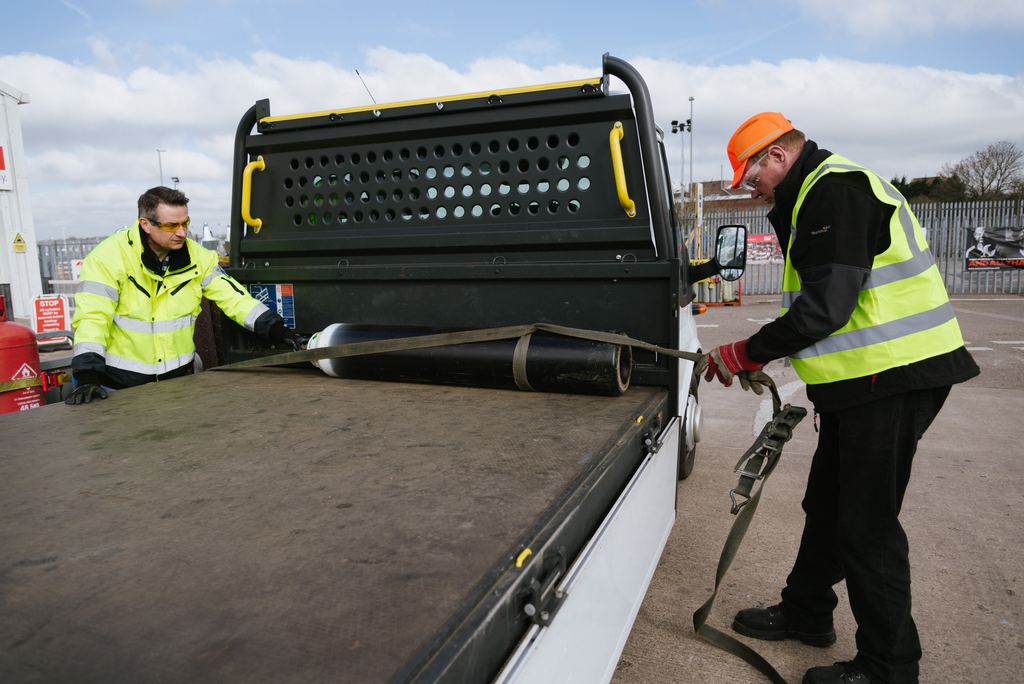
However short your journey, your cylinders need to be secured properly before you set off.
When you collect your cylinder from a BOC trade outlet, make sure:
- Your vehicle is open, or well-ventilated if it isn’t;
- Your cylinders are upright, secured, and don’t overhang the sides or end of the vehicle;
- All valves are closed and equipment disconnected before you move off;
- You’re carrying a fire extinguisher and the Safety Data Sheet for the gas you’re transporting.
If you’re unsure, ask the BOC team on site to help, and if you suspect a leak while you’re on the road, park up somewhere safe and contact us straight away.
(*The British Compressed Gas Association (BCGA) guidance CP50; The Carriage of Gas Cylinders on Vehicles, provides more detailed advice.)
Up the ladder, across the roof: handling cylinders on site
Manual cylinder handling should be taken seriously.
The latest HSE figures show handling, lifting or carrying was the single biggest cause of injuries serious enough to keep a construction worker off work for over a week – approximately a quarter of all cases.
And unlike many BOC customers who use their gas in a workshop, this is where roofing is especially tricky – you’re carrying your cylinder up ladders and across roof surfaces, often in tight spaces, in all weathers.
A few rules make this safer:
- Never roll or drag a cylinder – use a trolley on the ground, and don’t try to carry it one-handed, with other tools or materials in the other;
- Get help for any lifting involving a ladder – this isn’t a one-person job;
- Keep your eye on the cylinder at all times once it’s up on the roof, and never turn your back before it’s secure;
- If a cylinder starts to fall, let it go and shout a warning – never try to catch it.
(*Read the BCGA Document: GN3 Gas Cylinder – Manual Handling Operations for more.)
Know your valves, caps and regulators
Some parts of a cylinder are most likely to cause a problem if they’re handled correctly:
- Never remove or tamper with the cylinder valve;
- If there’s a security cap over the valve, this shows the cylinder’s been filled and checked – split it off using the hexagon nut and your regulator spanner;
- The regulator should be inspected to be in good condition and be the correct pressure rating and gas type for your gas – screw it in by hand, then tighten with the bottle key or spanner;
- When the valve’s open, keep the cylinder key in place or nearby in case of an emergency – and don’t leave the spindle wound hard back against the backstop, give it half a turn back instead so it doesn’t seize;
- Never attempt a repair, mix gases between cylinders, or scrap a cylinder that isn’t yours.
And don’t forget your PPE – the most important part of your kit.
Whenever you’re handling cylinders you should make sure you’re wearing the correct gloves for the task, safety footwear and appropriate eye protection, as well as your usual roofing PPE.
Storing cylinders overnight or between jobs
If your cylinders are staying on site or back at the yard, they should be stored upright in a well-ventilated area (ideally outdoors), kept apart from other materials, such as fuel, oil or paint, and segregated by gas type, according to their different properties.
(*For more, check the BCGA Codes of Practice 47 and 44 on storing gas cylinders and gas equipment, and CP7 for oxy-fuels.)
Take up your exclusive Master Roofers offer
For great member pricing on BOC cylinder gases, gas safety awareness training, or to talk through the right supply for your next project, get in touch:
- Call your BOC Account Manager, Mark Wilcock on 0161 451 1161 (8am – 5pm, Mon to Fri)
- Or email directsalesuk@boc.com
Be sure to quote ‘Master Roofers’ to access your member pricing.